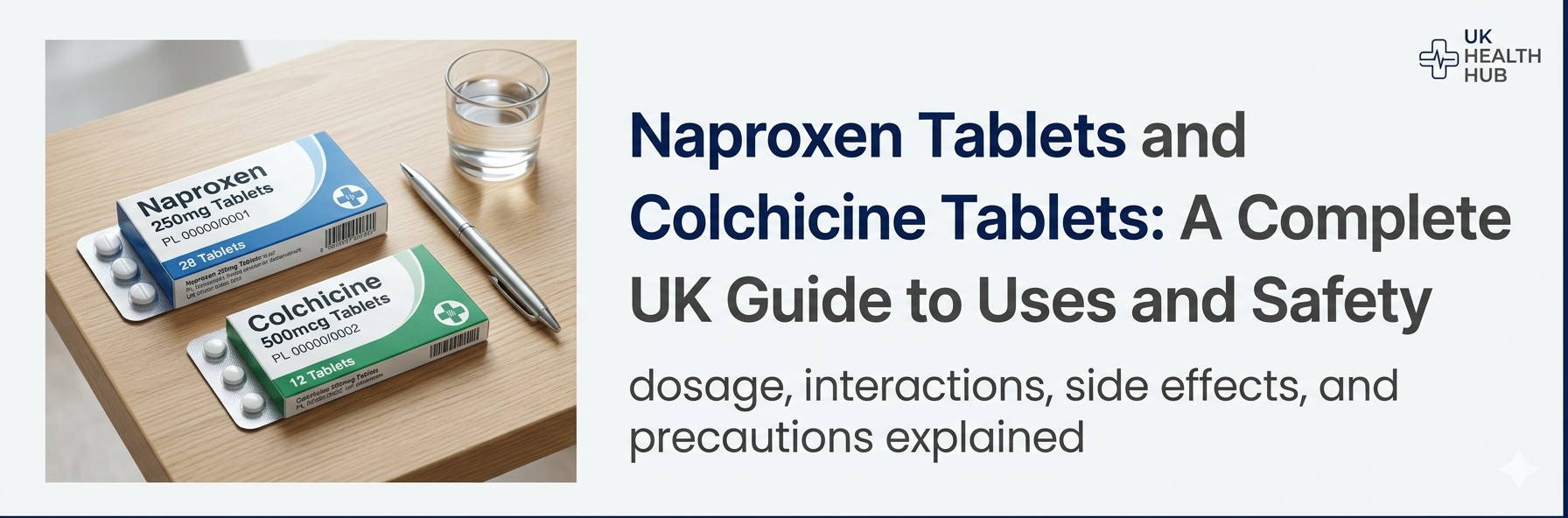
Naproxen Tablets and Colchicine Tablets: A Complete UK Guide to Uses and Safety
Pain and inflammation are two of the most common reasons people visit a pharmacy or GP surgery in the UK.
Introduction
Pain and inflammation are two of the most common reasons people visit a pharmacy or GP surgery in the UK. Among the many treatment options available, naproxen tablets and colchicine tablets are frequently prescribed or recommended, yet they work in very different ways and are used for different conditions.
Naproxen tablets are widely known for easing pain, swelling, and stiffness linked to conditions such as arthritis, muscle injuries, and period pain. Colchicine tablets, on the other hand, are specifically associated with treating and preventing gout flares.
Understanding the differences between these two medicines, how they work, who they suit, and the precautions involved can help you use them safely and get the most benefit from treatment. This guide brings together practical, pharmacist-informed information to help you make sense of naproxen tablets and colchicine tablets, whether you have just been prescribed one of them or are simply researching your options.
What Is Naproxen?
Naproxen belongs to a group of medicines called non-steroidal anti-inflammatory drugs, commonly shortened to NSAIDs. It is one of the most frequently used pain-relief medicines in the UK, available both on prescription and, in lower-strength formulations, over the counter for short-term use in certain age groups.
How Naproxen Tablets Work
Naproxen tablets work by blocking enzymes called cyclooxygenase-1 and cyclooxygenase-2 (COX-1 and COX-2). These enzymes are involved in producing prostaglandins, chemicals in the body that trigger pain, swelling, and inflammation.
By reducing prostaglandin production, naproxen tablets help to:
- Lower inflammation in joints and soft tissue
- Reduce pain signals sent to the brain
- Bring down fever in some cases
Because naproxen targets the underlying inflammatory process rather than simply masking pain, it tends to provide longer-lasting relief than some other over-the-counter painkillers, often working for up to 12 hours per dose.
Common Uses for Naproxen Tablets
Naproxen tablets are typically used for conditions involving inflammation and musculoskeletal pain, including:
- Osteoarthritis and rheumatoid arthritis
- Back pain and sciatica
- Sprains, strains, and sports injuries
- Period pain (primary dysmenorrhoea)
- Headaches and migraine-related pain
- Mild to moderate post-operative pain, when prescribed
In the UK, a lower-dose version of naproxen tablets is available without a prescription for women aged 15 to 50 to treat period pain on a short-term basis, while higher-strength naproxen tablets remain prescription-only and are reserved for ongoing inflammatory conditions.
What Is Colchicine?
Colchicine is a long-established medicine derived originally from the autumn crocus plant. Unlike naproxen, it is not classed as an NSAID. Instead, colchicine works by interfering with the way certain inflammatory cells behave in the body, making it particularly effective for gout.
Gout itself is more common than many people realise. Research using UK primary care data has found that gout now affects more than 3 in every 100 adults in England, with prevalence rising steadily over the past few decades, largely linked to lifestyle factors, obesity, and an ageing population.
How Colchicine Tablets Work
Colchicine tablets work by disrupting microtubule formation inside white blood cells, particularly neutrophils. This action reduces the movement of these cells to areas of inflammation, such as a joint affected by a gout flare.
In practical terms, this means colchicine tablets can:
- Reduce the intensity of a sudden gout attack
- Shorten the overall length of a flare
- Help prevent flares when started early in a gout cycle, particularly during the early stages of urate-lowering therapy
Colchicine does not lower uric acid levels itself; it manages the inflammatory response that causes pain during a flare.
Common Uses for Colchicine Tablets
Colchicine tablets are prescribed in the UK for:
- Treating acute gout flares, especially when NSAIDs are unsuitable
- Preventing gout flares during the first months of starting allopurinol or other urate-lowering medicines
- Familial Mediterranean fever, in some specialist cases
- Certain inflammatory conditions, under specialist guidance
Because colchicine has a narrow safety margin between an effective dose and a harmful one, it is only available in the UK on prescription, and dosing must always follow the prescriber's instructions exactly.
Benefits of Naproxen Tablets and Colchicine Tablets
Benefits of Naproxen Tablets
- Provides longer-lasting pain relief compared with some short-acting painkillers
- Reduces both pain and the underlying inflammation, not just the symptom
- Available in different strengths to suit mild, moderate, or chronic conditions
- Well-studied, with decades of clinical use behind it
- Can be combined with other pain-management strategies under medical guidance
Benefits of Colchicine Tablets
- Highly effective at calming acute gout pain when started promptly
- Does not carry the same stomach-lining risks as NSAIDs, making it useful when naproxen is unsuitable
- Helps prevent flares during the early, vulnerable period of starting long-term gout treatment
- Has a long track record in rheumatology, with established prescribing guidelines
Who Should Take Extra Care With These Medicines
When to Avoid or Be Cautious With Naproxen Tablets
You should speak to a pharmacist or GP before taking naproxen tablets if you have:
- A history of stomach ulcers or gastrointestinal bleeding
- Asthma that worsens with anti-inflammatory medicines
- Heart disease, high blood pressure, or a history of stroke
- Kidney or liver problems
- Are in the third trimester of pregnancy
When to Avoid or Be Cautious With Colchicine Tablets
Colchicine tablets require particular caution if you have:
- Significant kidney or liver impairment
- Are taking certain antibiotics or antifungal medicines, which can dangerously increase colchicine levels
- A history of blood disorders
- Are pregnant or breastfeeding, unless specifically advised by a specialist
Because colchicine has a narrow margin between a therapeutic dose and a toxic one, never adjust the dose yourself, even if symptoms do not improve quickly.
Common Mistakes When Taking Naproxen Tablets or Colchicine Tablets
Even widely used medicines can cause harm when taken incorrectly. Some of the most frequent mistakes include:
- Taking naproxen tablets on an empty stomach – this increases the risk of stomach irritation; taking them with food helps protect the stomach lining.
- Doubling up after a missed dose – with both medicines, doubling doses to "catch up" raises the risk of side effects without improving relief.
- Continuing colchicine tablets despite stomach upset – nausea, vomiting, or diarrhoea can be early signs of colchicine building up in the body and should be reported promptly rather than ignored.
- Mixing naproxen with other NSAIDs – combining naproxen tablets with ibuprofen or aspirin increases the risk of stomach bleeding without adding extra benefit.
- Not mentioning other medicines – certain antibiotics, statins, and heart medicines can interact with colchicine tablets, sometimes seriously.
- Assuming longer use is always safer – both medicines are generally intended for the shortest effective duration unless a doctor advises otherwise.
Expert Tips for Safe and Effective Use
- Always read the patient information leaflet that comes with naproxen tablets or colchicine tablets, even if you have taken them before.
- Take naproxen tablets with a meal or snack to reduce stomach irritation.
- Start colchicine tablets as early as possible after a gout flare begins, since timing strongly affects how well it works.
- Keep a simple medicines list, including any over-the-counter products, and share it with your pharmacist when starting either medicine.
- Stay well hydrated, particularly when taking medicines that affect the kidneys.
- Avoid alcohol where advised, as it can worsen stomach irritation with naproxen and increase strain on the liver with colchicine.
- Book a medicines review with your pharmacy if you are taking either tablet regularly for more than a few weeks.
When to Speak to a Pharmacist or GP
Seek advice promptly if you experience black or tarry stools, persistent stomach pain, unusual bruising, swelling in the legs, or signs of an allergic reaction such as facial swelling or difficulty breathing. With colchicine tablets specifically, persistent vomiting, diarrhoea, or muscle weakness should be reported the same day, as these can be early warning signs that need urgent review.
Conclusion
Naproxen tablets and colchicine tablets both play valuable roles in managing pain and inflammation, but they are designed for different purposes and carry different safety considerations. Naproxen tablets are a versatile option for arthritis, injuries, and period pain, while colchicine tablets are specifically targeted at managing the intense inflammation of gout flares.
Used correctly, both medicines can significantly improve quality of life and help people return to normal activities more quickly. The key is understanding how each one works, recognising who should take extra care, and avoiding common mistakes such as mixing medicines or ignoring early warning signs.
If you are unsure whether naproxen tablets or colchicine tablets are right for your symptoms, a conversation with your local pharmacist is a sensible first step. They can review your medical history, check for interactions, and guide you toward the safest and most effective option for your individual needs.
Frequently Asked Questions
1. What are naproxen tablets used for?
Naproxen tablets are used to relieve pain, swelling, and stiffness caused by conditions such as arthritis, muscle and joint injuries, back pain, and period pain. They work by reducing inflammation throughout the body, which helps ease both the discomfort and its underlying cause.
2. What are colchicine tablets used for?
Colchicine tablets are mainly used to treat and prevent gout flares, particularly during the early stages of starting long-term urate-lowering treatment. They reduce inflammation by limiting the movement of certain white blood cells to the affected joint.
3. Can naproxen tablets and colchicine tablets be taken together?
In some cases, a doctor may prescribe both medicines together during a severe gout flare, since they work through different mechanisms. However, this combination should only be used under medical supervision due to the increased risk of side effects.
4. How quickly do naproxen tablets start working?
Naproxen tablets typically begin easing pain within one to two hours, with effects often lasting up to twelve hours per dose. This makes them useful for conditions requiring sustained relief rather than constant redosing.
5. Are colchicine tablets available without a prescription in the UK?
No, colchicine tablets are prescription-only medicines in the UK due to their narrow safety margin and potential for serious toxicity if misused. A doctor or specialist must assess suitability before colchicine is prescribed.
6. What are the main side effects of naproxen tablets?
Common side effects of naproxen tablets include indigestion, stomach discomfort, headache, and dizziness. Less commonly, they can affect the stomach lining, kidneys, or cardiovascular system, particularly with long-term or high-dose use.
7. What happens if colchicine tablets are taken in too high a dose?
Taking too much colchicine can lead to serious toxicity, including severe vomiting, diarrhoea, and damage to organs such as the kidneys and bone marrow. Any suspected overdose of colchicine tablets should be treated as a medical emergency.
8. Can I take naproxen tablets for gout instead of colchicine?
Naproxen tablets are sometimes used for gout flares, particularly when colchicine is unsuitable, since both reduce inflammation. The right choice depends on individual health factors, so a pharmacist or GP should confirm which option is safest for you.
Category
Men's Health

