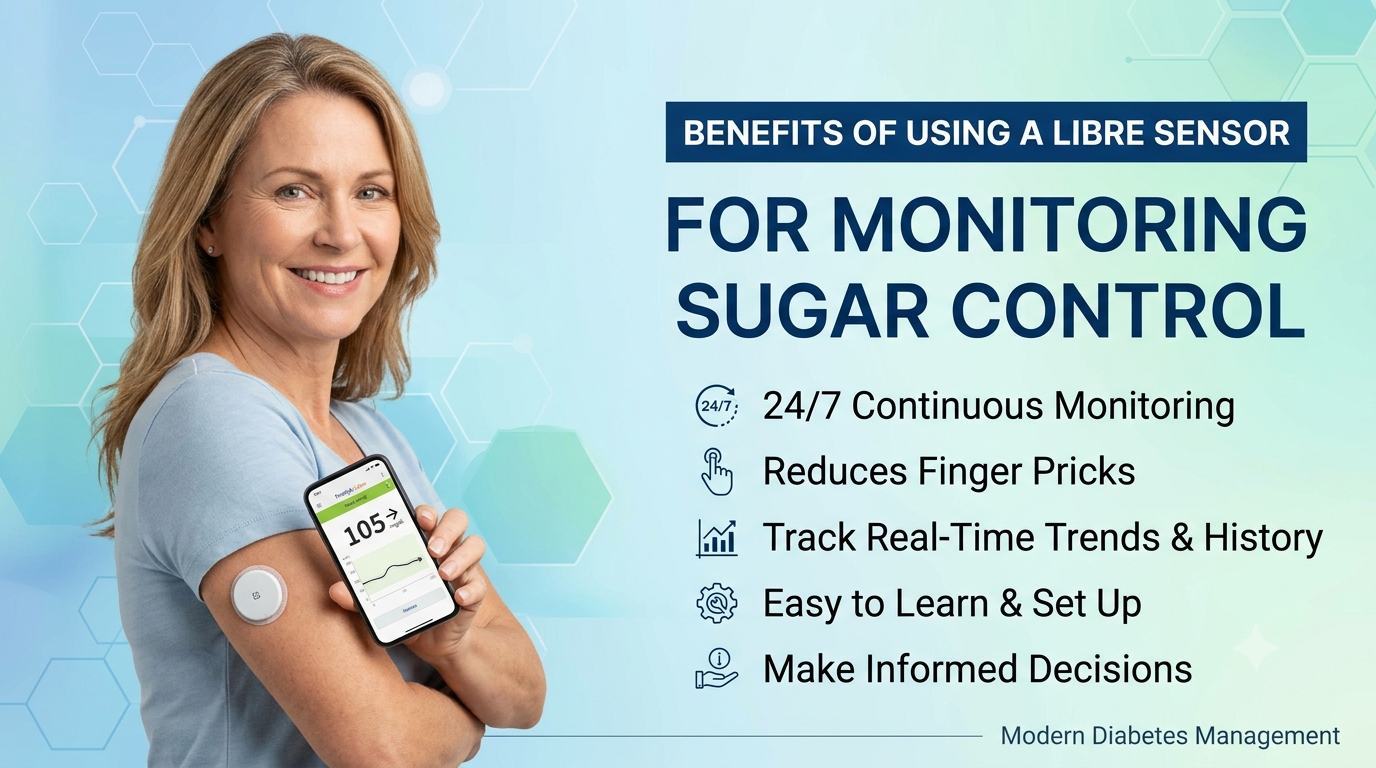
Benefits of Using a Libre Sensor for Monitoring Sugar Control
Discover how a Libre Sensor helps monitor glucose, improve sugar control, reduce finger pricks, and support better diabetes management every day.
Living with diabetes means living with numbers. Blood sugar levels shift throughout the day depending on food, stress, sleep, and activity, and keeping track of those changes used to mean multiple finger-prick tests every single day. For many people in Bradford and across the UK, that routine has changed thanks to flash glucose monitoring technology commonly known by its popular name, the Libre sensor.
At Holroyd Pharmacy, we speak with patients every week who want to understand whether switching to a Libre sensor is the right move for their diabetes management. This guide breaks down exactly what the sensor does, the real benefits it offers, and what to consider before you start using one.
What Is a Libre Sensor?
A Libre sensor is a small, coin-sized device worn on the back of the upper arm. It sits just under the skin and measures glucose levels in the interstitial fluid (the fluid between cells) rather than directly in the blood. A compatible smartphone app or reader device scans the sensor to display a current glucose reading, along with a trend arrow showing whether levels are rising, falling, or holding steady.
Unlike traditional testing, which gives you a single number at a single moment, the sensor continuously records data in the background. This means that instead of guessing what happened between tests, you get a fuller picture of how your glucose behaves over hours, days, and weeks.
Why People Are Switching From Finger-Prick Testing
For decades, finger-prick testing was the standard way to check blood sugar. It works, but it has real limitations: it's painful with repeated use, it only captures one moment in time, and it doesn't show the direction glucose is heading. The Libre sensor was designed to address exactly these gaps, and that's why so many people are making the switch.
1. Fewer Finger Pricks, Less Discomfort
The most immediately noticeable benefit is the reduction in finger pricking. Instead of pricking a finger several times a day, users simply scan the sensor with a phone or reader. For children, people with a fear of needles, or anyone who tests frequently, this alone can make daily diabetes management far less stressful and far more sustainable.
2. Continuous, Real-Time Data
Because the sensor takes readings automatically throughout the day and night, it captures patterns that a single finger-prick test would completely miss. Someone might have a normal reading before bed but experience a drop overnight something that would go unnoticed with occasional testing but shows up clearly on a Libre sensor's history graph.
3. Trend Arrows for Smarter Decisions
One of the most valuable features is the trend arrow. Rather than only seeing "your glucose is 6.2 mmol/L right now," you also see whether it's rising quickly, rising slowly, stable, falling slowly, or falling quickly. This context helps people make more informed choices about food, activity, or medication timing, in line with guidance from their diabetes care team.
4. Better Long-Term Sugar Control
With more frequent data points, patterns become easier to spot. Users and healthcare professionals can identify what specific meals, activities, or times of day tend to cause spikes or dips. Over time, this insight supports more stable glucose control and can help reduce the extreme highs and lows that are harder to manage with sparse testing data.
5. Discreet and Convenient
Scanning a sensor takes a second or two and can be done through clothing, discreetly, almost anywhere at work, at school, during exercise, or out with friends. This convenience often means people check their glucose more consistently simply because it's easier to do, which naturally leads to better awareness and control.
6. Helpful Data to Share With Your Healthcare Team
Most Libre-compatible apps store weeks of historical data, including daily patterns and time-in-range statistics. This information can be shared directly with a GP, diabetes nurse, or pharmacist, giving them a much clearer picture than a handful of logbook entries. It can make consultations more productive and support more personalised adjustments to treatment plans.
7. Supports an Active Lifestyle
For people who exercise regularly, glucose can behave unpredictably during and after physical activity. Being able to glance at a trend arrow before, during, and after a workout allows for quicker, more confident decisions whether that means having a snack, adjusting insulin timing (as advised by a clinician), or simply continuing on with peace of mind.
8. Reduced Anxiety Around Hypos and Hypers
Many users describe a sense of reassurance that comes from being able to check glucose quickly and painlessly, especially overnight or during periods of illness. While the sensor itself doesn't replace clinical advice, having regular visibility into glucose trends can ease some of the day-to-day worry that comes with managing diabetes.
Who Can Benefit From a Libre Sensor?
Libre sensors are commonly used by:
- People with Type 1 diabetes who need frequent monitoring to manage insulin dosing
- People with Type 2 diabetes, particularly those on insulin or certain other glucose-lowering medications
- Parents and carers monitoring glucose levels in children with diabetes
- Individuals who find finger-prick testing painful, inconvenient, or difficult to maintain consistently
- Anyone advised by their GP or diabetes team to monitor glucose trends more closely
Not everyone will be eligible for or benefit equally from flash monitoring, and suitability can depend on individual health circumstances, medication, and NHS or private funding criteria. This is why speaking with a pharmacist or GP before starting is an important first step.
Things to Consider Before Starting
While the benefits are significant, it's worth understanding a few practical points:
- Accuracy and calibration: Sensors measure glucose in interstitial fluid, which can lag slightly behind blood glucose, particularly during rapid changes. Your healthcare provider can explain when a traditional finger-prick check might still be recommended.
- Wear time: Most sensors are designed to be worn continuously for a set number of days before replacement.
- Skin sensitivity: A small number of users experience mild skin irritation at the sensor site.
- Cost and access: Depending on your diagnosis and NHS eligibility, sensors may be available on prescription or may need to be purchased privately.
Our pharmacy team can talk through eligibility, fitting, and ongoing supply so you know exactly what to expect.
Frequently Asked Questions
Does a Libre sensor hurt to apply?
Application involves a brief, painless insertion using an applicator. Most users report little to no discomfort.
How long does one sensor last?
This varies by sensor generation, but most are designed to be worn for one to two weeks before replacement.
Can I swim or shower with it on?
Many sensors are water-resistant for showering, bathing, and swimming, though it's best to check the specific product guidance.
Do I still need to do a finger-prick test at all?
Some situations such as symptoms that don't match the sensor reading, or rapidly changing glucose may still call for a traditional finger-prick check, based on advice from your healthcare provider.
Is a Libre sensor available on the NHS?
Eligibility depends on individual clinical circumstances. Your GP or diabetes team can confirm whether you qualify for NHS-funded sensors.
How Holroyd Pharmacy Can Help
Managing diabetes well isn't just about the technology it's about having the right support alongside it. At Holroyd Pharmacy, based at Holroyd Business Centre in Bradford (BD5 9BP), our team is on hand to help you understand your options, discuss sensor availability, and support you with ongoing diabetes care.
Whether you're considering a Libre sensor for the first time or want advice on getting the most out of one you already use, we're happy to help.
Get in touch with us:
- 📍 Holroyd Business Centre, Bradford, BD5 9BP
- 📞 (01274) 738866
- ✉️ info@holroydpharmacy.co.uk
- GPhC registration no: 9010615
Visit us in person or call our friendly team today to discuss how better glucose monitoring could support your diabetes management journey.
Category
General Health